Active threats
02
intrusion detected in the security zone
Detection, confirmation, response and engineering protection of critical facilities against aerial and ground threats — in a single command loop.
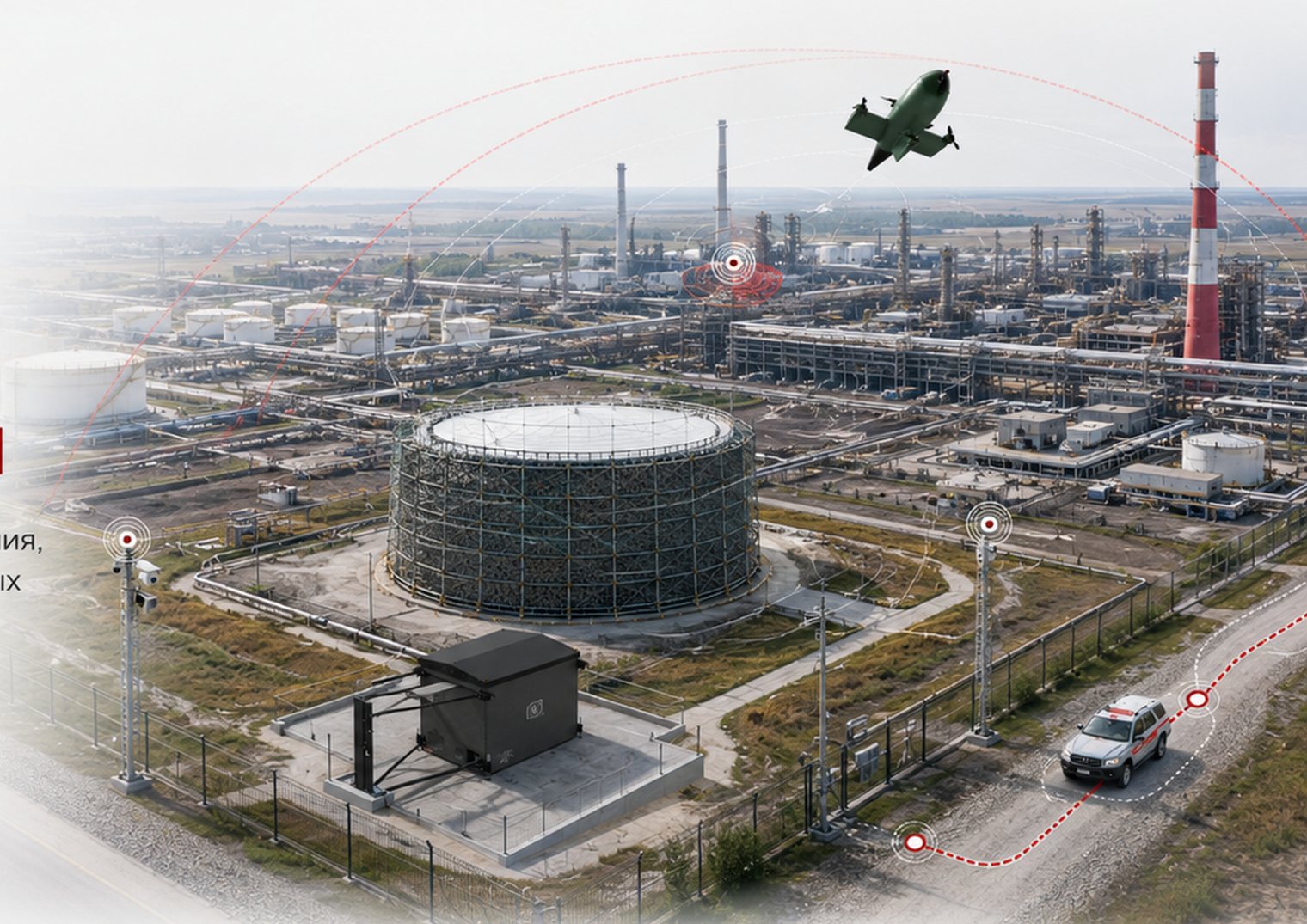
Radar surveillance, electro-optical and thermal confirmation, acoustic and covert sensors, autonomous interceptor drone-ports, mobile teams, a command centre and engineering protection — in one loop.
Full-circle surveillance and detection of low-flying targets at long range.
PTZ cameras and thermal imagers verify and track the target.
UAV type identification by signature and internal-situation monitoring.
Storage, preparation and automatic launch of interceptors.
High-speed autonomous interception of fixed-wing aerial targets.
Alert dispatch, ground confirmation and threat containment.
Data correlation, threat assessment and response coordination.
Passive barriers for tanks, areas and vulnerable nodes.
Each zone has its own monitoring, access and response requirements — by criticality and risk.
Control of the air corridor above the facility; detection and classification of aerial targets.
Fencing, access roads, security zones and engineering barriers protecting the facility from external intrusion.
Access control and video surveillance of installations, utilities and personnel.
Overgrowth, storage areas, pipe racks and inter-pipe spaces with limited visibility — additional detection required.
Tank farm, process units, communication nodes and checkpoints — elevated protection and redundancy.
Six levels run as one cycle: continuous monitoring, confirmation, analysis, response and engineering protection.
Radar coverage and acoustics detect low-flying targets at long and short range.
up to 60–80 kmPTZ cameras and thermal imagers confirm type and behaviour and track day or night.
The platform normalizes all sensor data, assesses the threat, predicts the trajectory and forms a plan.
RDP X1 interceptors neutralize aerial targets; mobile teams act on the ground.
up to 320 km/h · 7 kmResilient cable and mesh structures reduce the risk to tanks, nodes and areas.
A single operational space, situational awareness, reporting and cybersecurity.
Early detection of low-flying aerial targets at long range, with tracks handed off to the command platform.
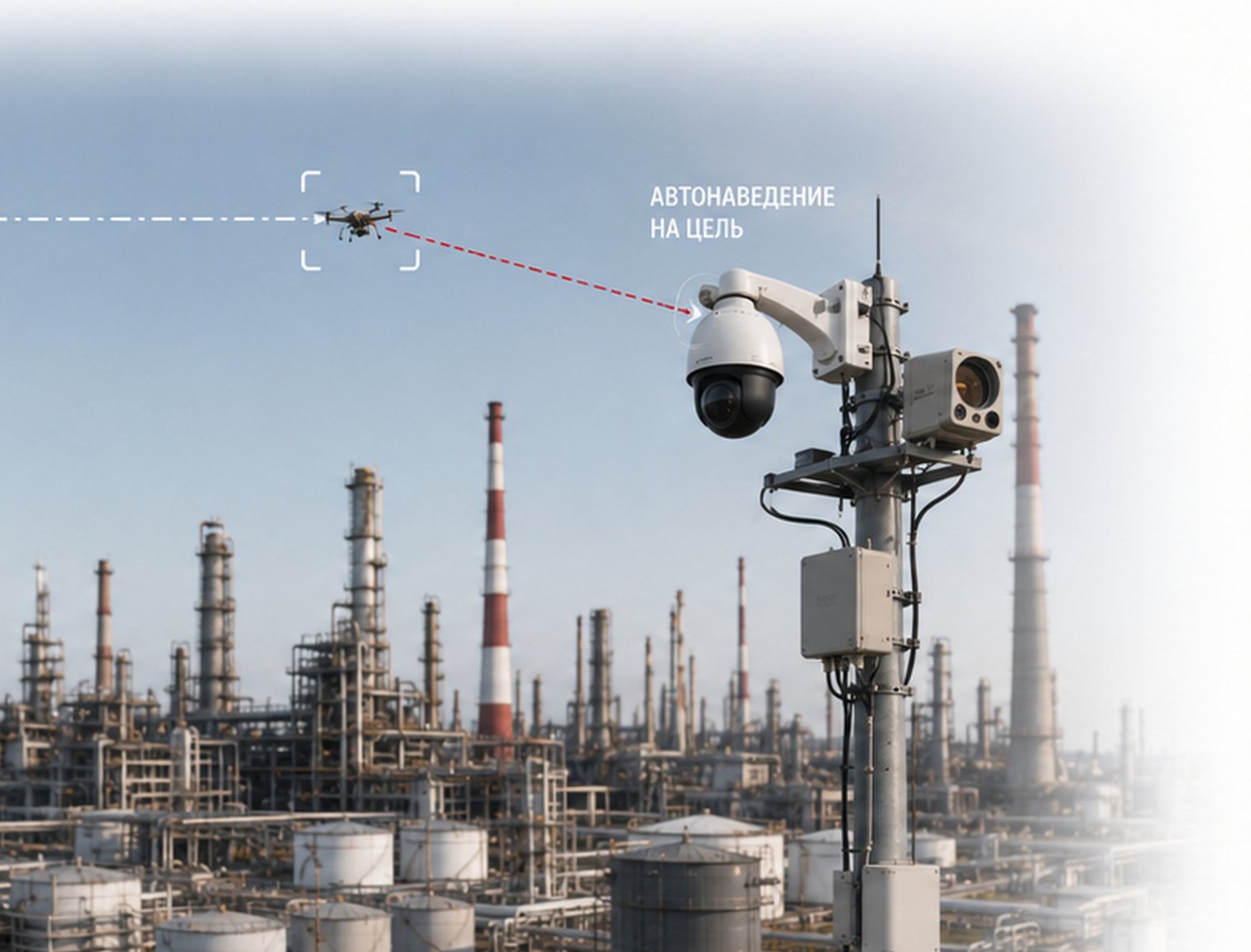
Long-range radar posts detect aerial objects at maximum range and low altitude, form initial tracks and pass coordinates to confirmation and command.
High-speed autonomous interception of fixed-wing aerial targets. An executive element of the protection ecosystem.
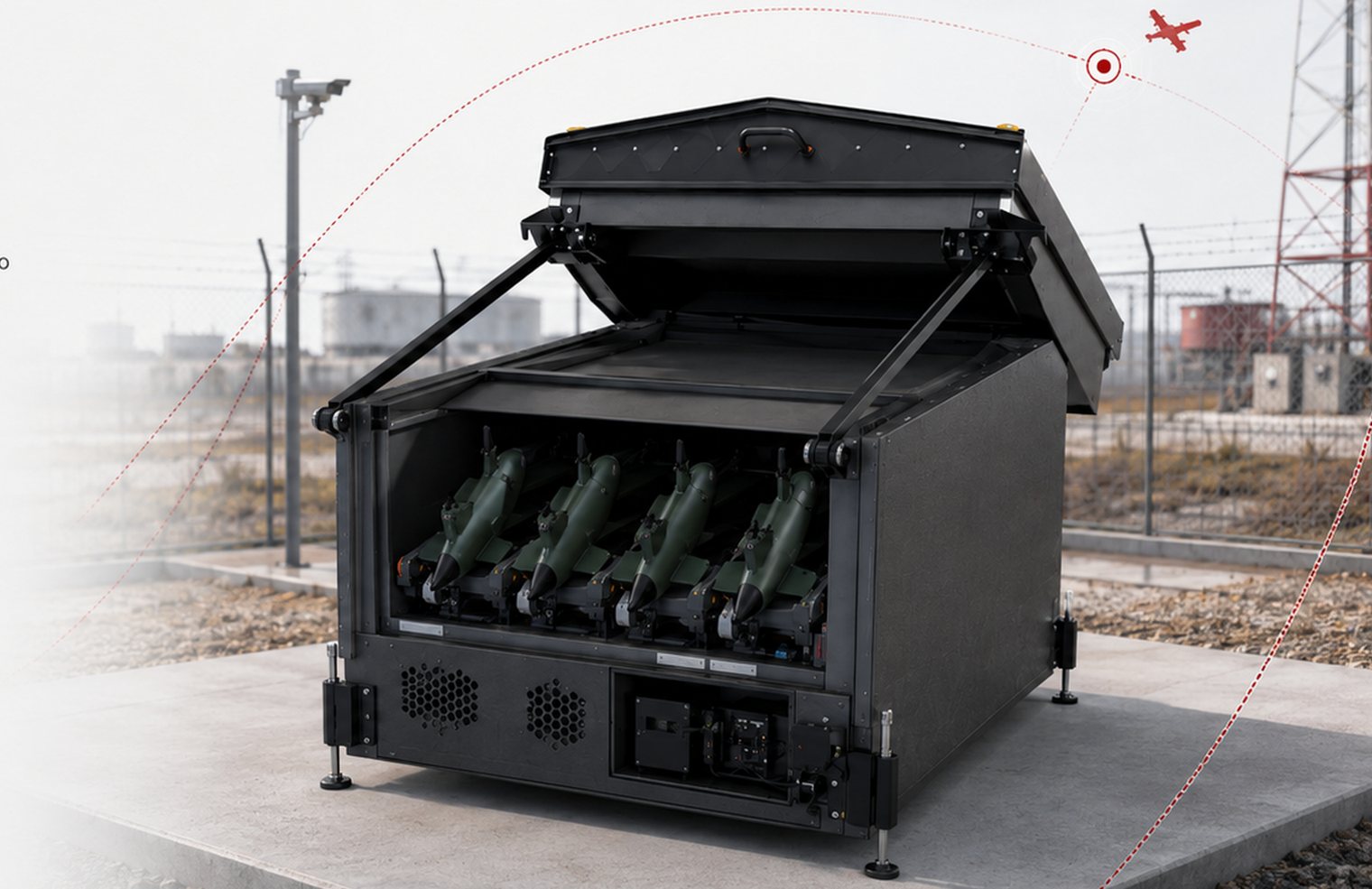
Receives target designation from radar posts and confirmation from electro-optical means, then performs autonomous interception at a safe distance from critical objects and people.
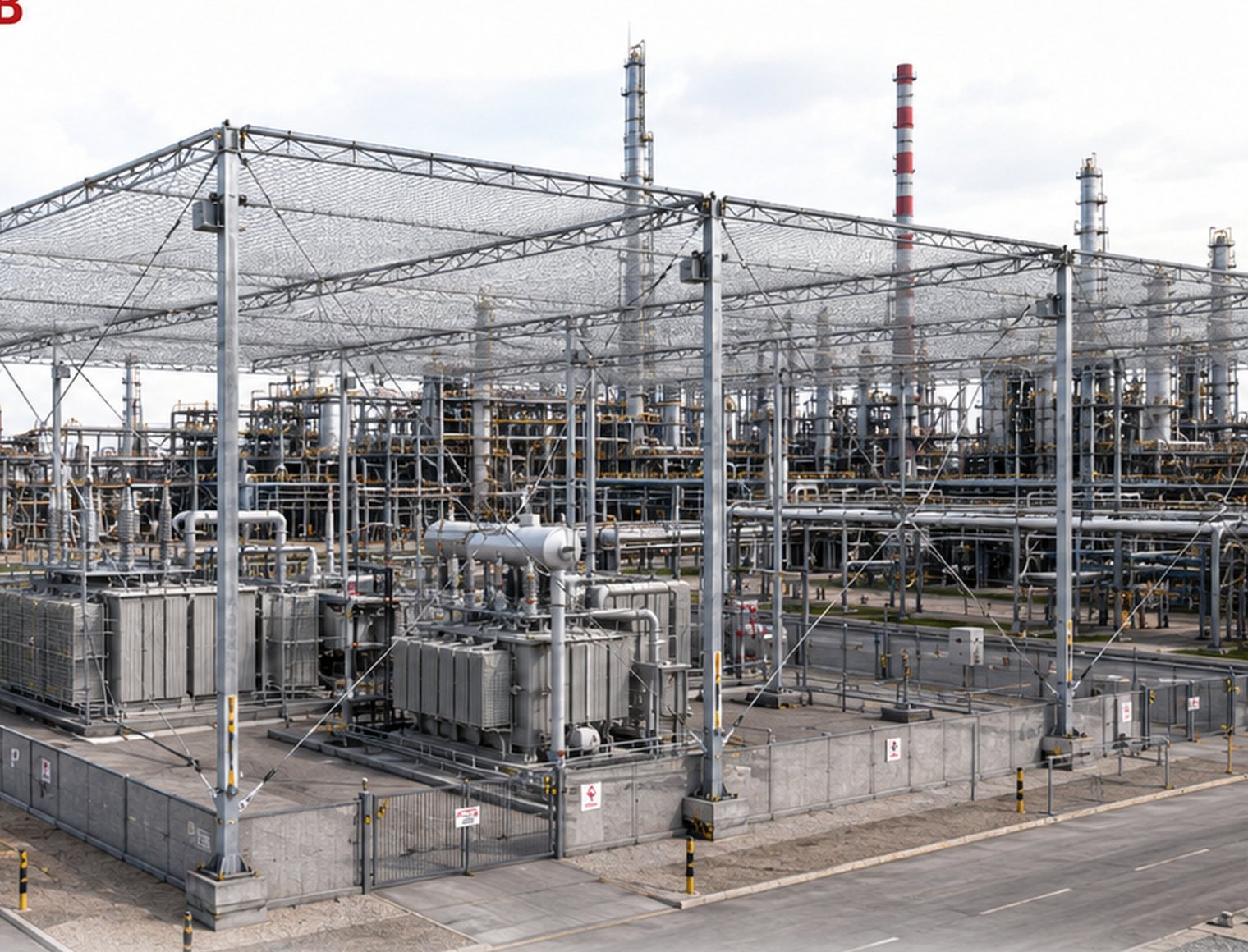
Multi-layer cable and mesh structures intercept and retain fragments, reducing the risk of tank-wall penetration and localizing consequences. Each solution adapts to the facility type and threat model.
Upper and outer cable nets, an inner steel mesh and a spatial frame with a standoff gap retain fragments and debris.
A steel truss frame with a protective mesh canopy (20–50 mm cell) fully covers open process areas.
Rapidly deployable gabion sections locally reinforce communication, control and power nodes.
All subsystems work in one command and display loop — with continuous real-time situational awareness.
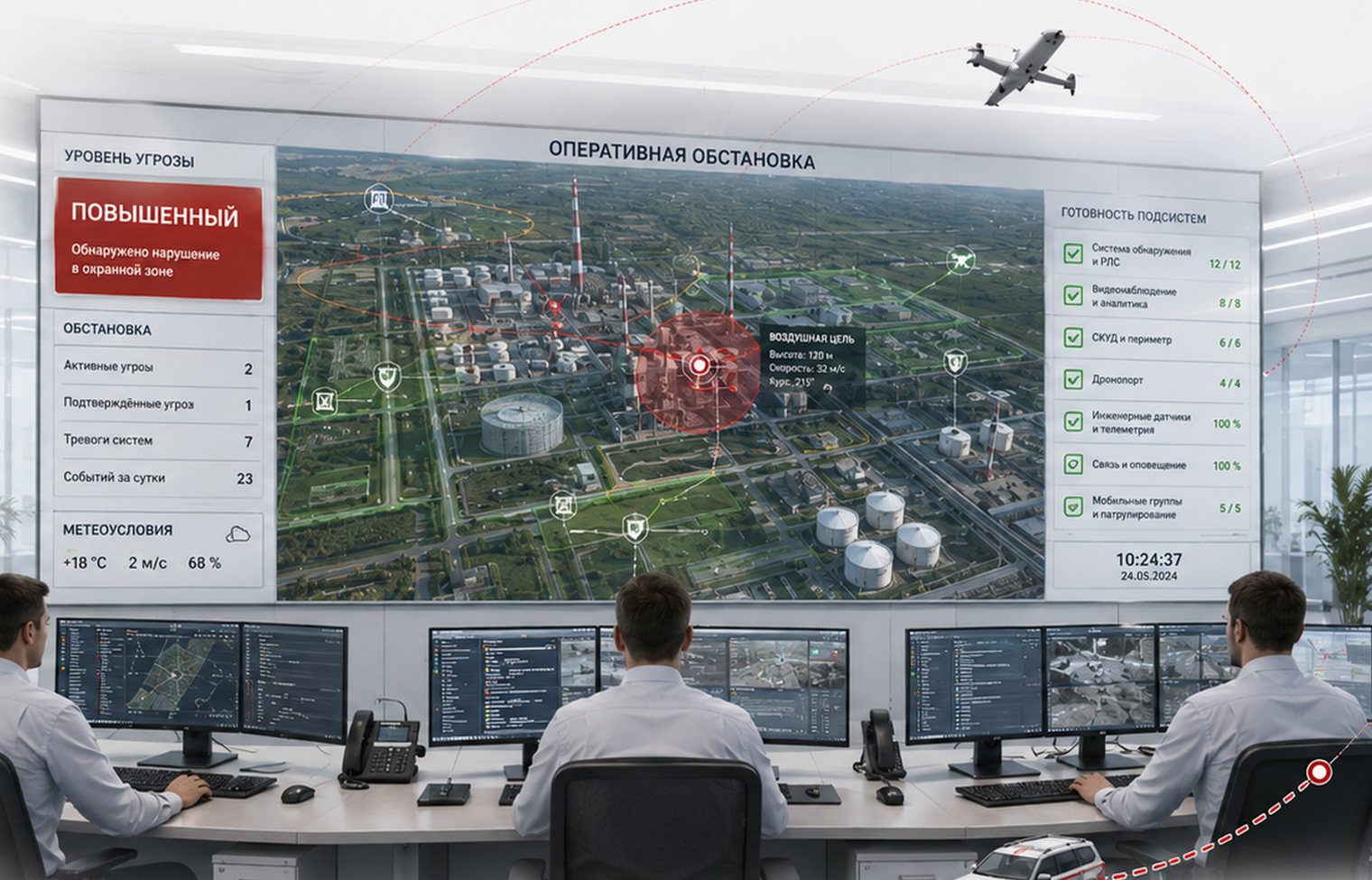
Autonomous launch, separated communication channels and full redundancy keep the system running under load and external impact.
Sealed storage of RDP X1 interceptors in ready state, pre-launch preparation and automatic launch.
up to 4 × RDP X1Three channel classes: an IP backbone for sensors and analytics, secured interceptor-control links and low-rate telemetry. Encryption and authentication.
Duplication of channels, equipment and power. Route recovery without operator involvement.
Coordinated action across all subsystems delivers minimal reaction time and maximum effectiveness.
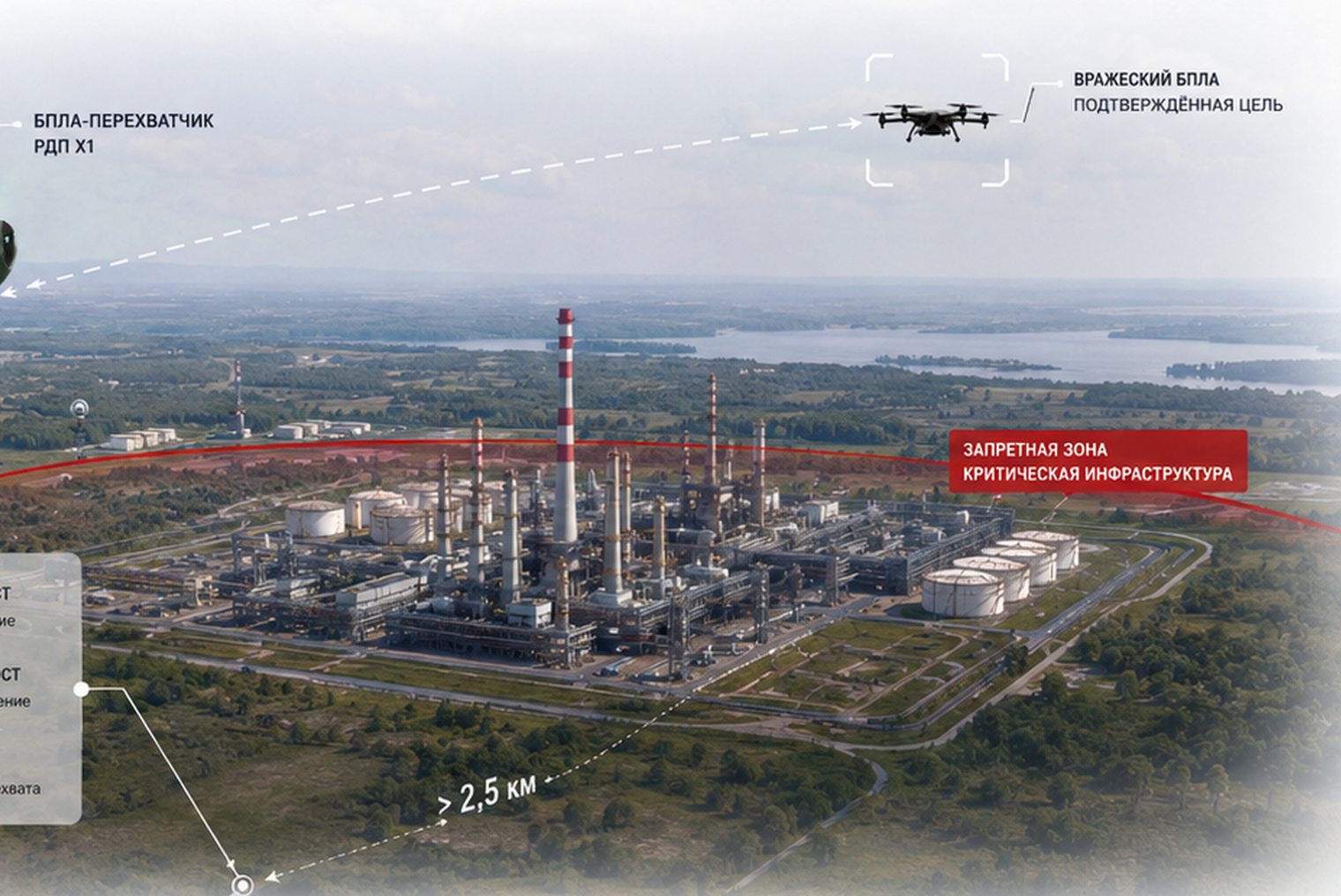
Radar and sensors continuously scan the airspace and automatically flag a target by speed, trajectory and behaviour.
Video surveillance locks onto the target, confirms class and behaviour; the operator selects the response.
The platform predicts the trajectory, assesses threat probability and forms an interception plan.
The autonomous drone-port runs diagnostics, brings interceptors to readiness and receives the launch command.
The interceptor autonomously reaches the target and neutralizes it at a safe distance from critical objects.
A mobile team inspects and clears the debris; all incident data is logged for analysis and reporting.
Reduces the probability of a successful strike on critical objects to the minimum possible level.
Threats identified at maximum range and confirmed in real time.
Shorter detection → assessment → neutralization cycle.
Reliable operation of the facility under any scenario or external impact.
Integration and automation raise efficiency and cut operating costs.
Meets regulatory and best-practice requirements; builds partner and investor trust.
Share your facility parameters — we'll prepare a calculation for your specific threats and topology. The coordinates you provide let us assess the surroundings from satellite data in advance.